
Some years pass by almost without a trace. Others become milestones because they bring together communities, important decisions, and lessons that continue to reverberate. 2025 was one of those years for Raízes.
Over the course of twelve intense months, we visited different territories, engaged in dialogue with communities, organizations, companies, and institutes, and deepened our understanding of methodologies that place sustainable development at the center—always based on listening, care, and collective construction.
Thirteen projects were developed, in addition to events, immersions, lectures, and institutional milestones that reaffirm Raízes’ commitment to development rooted in the territory, people, and local knowledge.
This text is an invitation to remember achievements, processes, and connections that have helped strengthen paths already taken and open up new possibilities for the future.
Shall we go together?
Projects developed in partnership: impact that comes from collective action
The year began with the completion of important projects, the result of partnerships built over time.
In southern Bahia, Raízes concluded its mentoring program carried out in partnership with CI-Brazil and Futuri, a process aimed at strengthening local responsible tourism initiatives. The initiative integrated strategy, sustainability, and territory, reinforcing the role of qualified listening and continuous monitoring as drivers of transformation. This mentoring program was part of the project Tourism + Sustainable.
Also at the beginning of the year, Mãos à Moda Almenara was completed in the Jequitinhonha Valley. Conceived by Sebrae Minas and co-created with Raízes Desenvolvimento Sustentável, in partnership with the Almenara City Hall, the project celebrated sustainable fashion as a tool for female empowerment, valuing traditional knowledge, cultural identity, and productive autonomy of the women involved.

In the first few months, Raízes delivered the Feasibility Study for the Tourist Train in São João da Boa Vista and Águas da Prata, São Paulo, at the request of VLI and APTF (Association for the Preservation of Railway Traditions). The study analyzed the initiative’s potential for regional development, integrating tourism, heritage, mobility, and the local economy.
In Querência, Mato Grosso, Raízes collaborated with Re.green to conduct a detailed survey of stakeholders at Fazenda Pioneira and Fazenda Darro (Agro Penido). The work included identifying, characterizing, and consulting key actors, and the results obtained indicated a promising scenario. Raízes’ analysis highlighted that the local context has favorable institutional and social conditions for the structured development of Re.green’s forest restoration proposal, with the potential to become a regional benchmark.
We cannot fail to mention that one of the major milestones of 2025 was the Structuring and Promotion of the Combú Route, an initiative of Sebrae Nacional, in partnership with Sebrae Pará, with Raízes Desenvolvimento Sustentável as the executing partner. The route was created with the aim of improving community-based tourism, promoting local culture, extending the length of stay of visitors, and generating more benefits for the community with less environmental impact. The Combú Route was officially launched at the 52nd ABAV Expo in Rio de Janeiro.

With the Arbo Institute, Raízes developed a strategic and assertive call for proposals for new projects in an area where we have extensive expertise: income generation for vulnerable women. In this case, we created the TR, or Terms of Reference: an essential step to ensure that the call for proposals is clear, accurate, and capable of attracting proposals that are truly aligned with what is being sought.
Together with the Arbo Institute, we also conducted a survey with tourists in Tiradentes, Minas Gerais, to understand important factors to consider when replacing animal-drawn carriages (ADCs) with electric vehicles (EVs), the charming Charretours. The objective of the survey, which included researchers from UFJF, was to identify how to ensure the attractiveness of this tourist transport and continue to generate income for carriage drivers after the transition determined by the Public Prosecutor’s Office for animal protection.
Still in Minas Gerais, the year 2025 was marked by the success of two projects focused on handicrafts. One highlight was the completion, with great satisfaction, of the project “Oficina Gente de Fibra – Cocriando o Futuro” (People of Fiber Workshop – Co-creating the Future), in Maria da Fé. The initiative, carried out between 2024 and 2025, was supported by SEBRAE Minas and in partnership with the Maria da Fé City Hall. The collective, which for more than two decades has been transforming what nature offers into art, income, and belonging, ended a cycle of strengthening and learning, consolidating its relevance in the Brazilian sustainable handicraft scene.

The Santa Bárbara Fashion and Handicrafts Project, carried out with support from Sebrae, inaugurated a new phase of governance based on its work with Casa das Tecelãs and Olaria Urbana, strengthening collective and organizational processes.
At the end of the year, Raízes began reviewing the Yaripo Ecotourism Business Plan, in partnership with the Socio-Environmental Institute (ISA) and the Yanomami people in the village of Maturacá, Amazonas. This was a collaborative process, involving attentive listening and in-depth exchanges, which reaffirmed the importance of initiatives that originate in the territory and remain there.
Own projects, community partnerships, and institutional strengthening
In addition to institutional partnerships, 2025 was also a year of continuity and care for Raízes’ own projects, which continue to mature organically and consistently.

Dona do Meu Fluxo, created in 2017 from a partnership between Raízes Desenvolvimento Sustentável and Korui, has continued its activities in different areas, including Santo André (BA), Cariri (CE), the Prainha do Maró community (RESEX Tapajós-Arapiuns, PA), Associação das Mulheres Ribeirinhas do Igarapé Combú (Belém, PA), Instituto Karanba (São Gonçalo, RJ), Associação Quilombola do Buri (BA), in addition to health and menstrual education initiatives at Escola Municipal de Ensino Fundamental (EMEF) José Saramago (Capão Redondo, SP) and in Nova Cachoeirinha (Belo Horizonte, MG). We are happy that the project continues to fulfill its essential role of care, autonomy, and dignity.
Our Home Stay Project, carried out in conjunction with Diaspora.black, developed in the context of COP30, reinforced the leading role of local communities and the importance of hospitality models that respect the territory, promote income generation, and foster the development of sustainable tourism. black, developed in the context of COP30, reinforced the leading role of local communities and the importance of hospitality models that respect the territory, promote income generation, and strengthen community ties.
The project developed in Quilombo Buri, on the northern coast of Bahia, was a direct partnership with the community, reaffirming a form of tourism that originates in the territory, values local history, and strengthens processes of autonomy, organization, and belonging.
Events, immersions, and milestones that marked the year
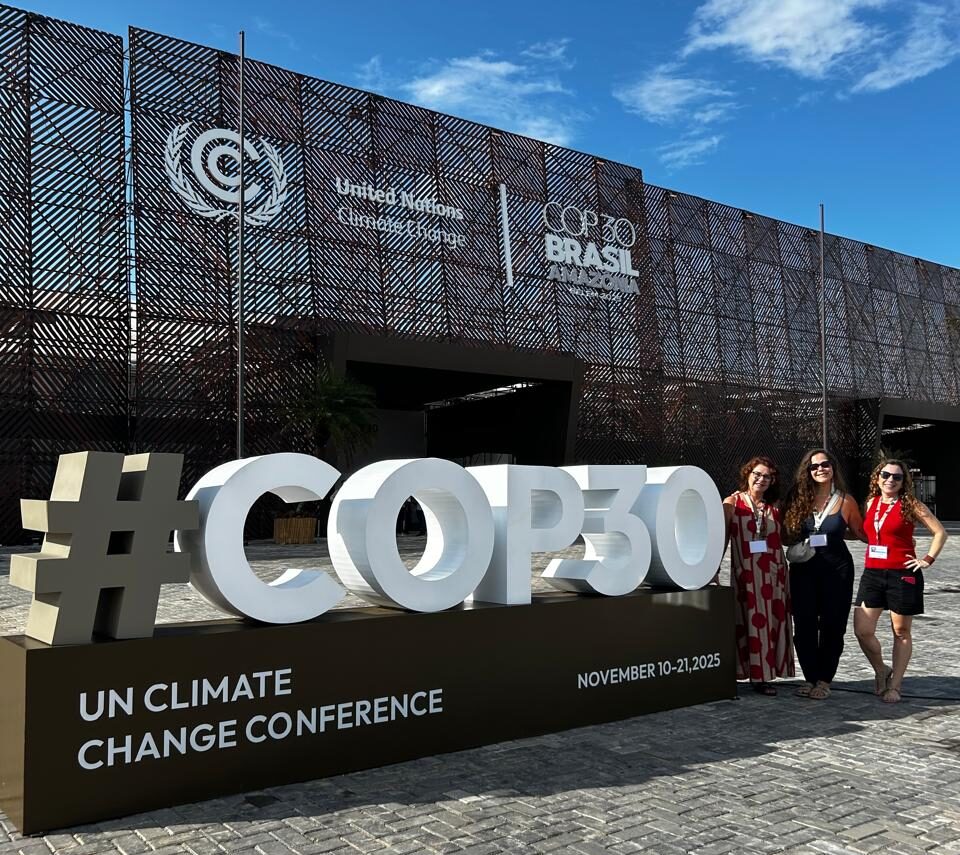
2025 was also marked by intense circulation, exchanges, and institutional presence. Raízes was heavily involved in the COP30 discussions, participating in several lectures. Here are some reflections we had after the Conference and check out our COP30 Coverage on Turismo Spot! In addition, we had the honor of contributing to lectures at WTM São Paulo, Glocal Manaus, Conservação em Águas de São Pedro, the National Congress of Sustainable Tourism and Culture in Belo Horizonte, and other events around Brazil.
The team also attended events such as Parques do Brasil (Semeia), Impacta Mais (Hub), Exposibram in Salvador, the B Lab/ Sistema B Meeting in Belém, and the Brazilian Forum on Responsible Tourism in Brasília, strengthening networks, exchanges, and strategic partnerships.
The year also featured two Raízes immersions—in Porto Seguro (BA) and Ouro Preto (MG)—important moments for internal reflection, alignment, and strengthening of the bonds that sustain our daily work.
As a major institutional milestone this year, we must mention that Raízes signed the Glasgow Declaration, reaffirming our commitment to climate action in tourism and practices aligned with reducing environmental impacts.
Speaking of climate action, we have launched an exclusive e-book with articles by our experts on regeneration in tourism, culture, relationships, the economy… in life!
More than just a busy year, 2025 was a year of maturation. It was a year of projects that took shape, partnerships that deepened, and choices made with awareness and care.
We continue to make an impact, strengthening paths and nurturing the relationships that make this work possible. Here’s to much more in 2026!