There are times when a project needs to take a deep breath, look back at its own trajectory, and recognize that it has grown. And we are experiencing one of those moments with the Dona do Meu Fluxo, which says a lot about female autonomy.
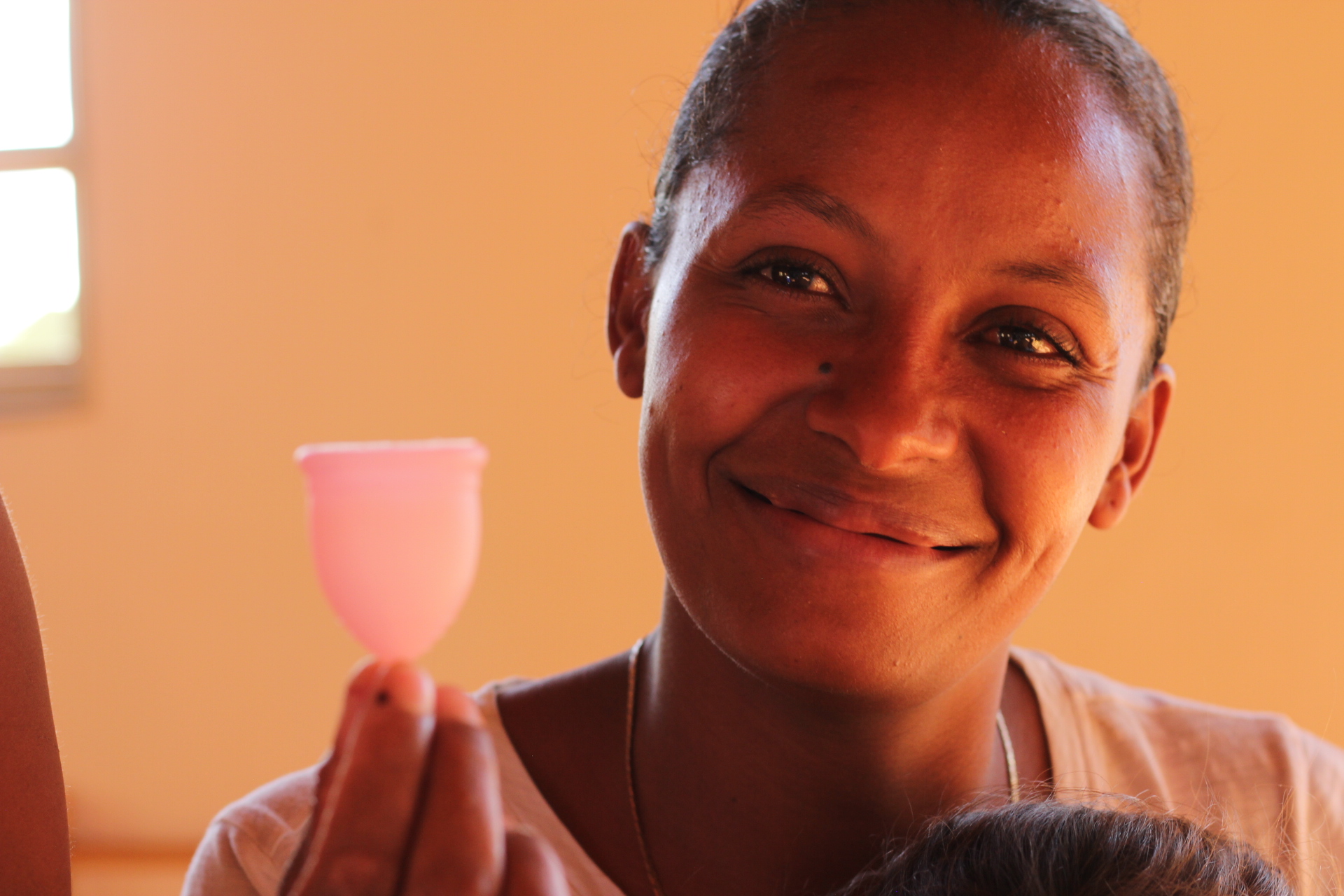
The Owner of my Flow as an initiative began in 2017, when period poverty was even more invisible than it is today. Over the years, we have traveled through urban peripheries, riverside territories, indigenous communities, and different contexts of vulnerability, reaching more than 6,500 women with the donation of menstrual cups in partnership with Korui. These were cycles of listening, workshops, experimentation, and continuous learning.
Along the way, we have seen the public debate mature. We have witnessed advances in public policies that now guarantee the distribution of menstrual products. We have gained international recognition—including as Gold Winner da WTM Latin America — for an innovative model that used voluntourism as a tool for mobilizing and raising minimal funds to sustain a non-profit project.
We have always understood Dona do Meu Fluxo (Owner of my Flow) as a living laboratory: an experimental project, open to adjustments, attentive to changes in context. The menstrual cup remains a powerful technology: healthier, more sustainable, with less waste generation. But over time, we realized that talking only about menstrual flow was no longer enough. Because what is at stake has never been just the biological body: it is also the social body, the lives of women as a whole.


Where does autonomy come in?
Today, we understand that being in control of one’s own flow involves much more than access to supplies. It involves autonomy. And we make a point of using this word carefully. We have reflected on the term “female empowerment” and its limitations. Autonomy seems more accurate to us, because it is something that is built gradually and with concrete conditions for its maintenance.
Therefore, a woman can only truly be in control of her life if she has the ability to manage her own decisions, her time, her projects, and also her financial resources. We know that many women remain in abusive relationships, for example, due to economic dependence. According to the study “Financial independence and violence against women: a documentary analysis of Brazilian institutional reports, developed by Carolina Campos Afonso, a doctoral student in clinical psychology and culture at the University of Brasília (UnB) Carolina Campos Afonso, an employee of the Court of Justice of the Federal District and Territories (TJDFT) and published in 2025, 61% of women say that financial dependence prevents them from reporting abuse, and 52.2% of victims have an income of up to two minimum wages. Property violence is a reality. Femicide is on the rise. Lack of financial autonomy still imprisons women.
That’s why we’re expanding the scope of Dona do Meu Fluxo.
Flows of life, including financial flows
Menstrual flow continues to be part of the program. But now it is linked to life planning, financial organization, and economic autonomy. We are redesigning the workshops to integrate menstrual education with financial flow education, as we understand that these topics overlap and reinforce each other.
This new phase is under construction! In March, we will launch an experimental workshop that embodies this next step. And we have chosen to make this transition public because we believe in collective construction.
If this change appeals to you, if your organization wants to get involved, if you have ideas, want to schedule a meeting, or build a partnership, now is the time!
We are opening this process to the world because we believe that structural transformations are made through networking. Dona do Meu Fluxo is still going strong and now broader than ever.