Some conversations end when the session is over, while others go on because no one wants to stop talking. And that’s more or less what happened during the course “Community-Based Tourism, Food Culture, and Local Economy,” organized by Pontão Territórios Rurais e Cultura Alimentar and the Network of Rural Culture and Memory Centers, with support from the Ministry of Culture, and which included Raízes’ participation in the meetings held in April.
Representing our social enterprise, Jussara Rocha and Lucila Egydio led classes on territorial hospitality, food sovereignty and security, as well as the behind-the-scenes aspects of community-based tourism management. But what happened there was more than just a technical exchange. At many moments, it felt more like a circle woven together by shared memories, experiences, and concerns among people from different regions of Brazil who continue striving to protect what still preserves their identity, flavor, and sense of belonging.

Food as Collective Memory
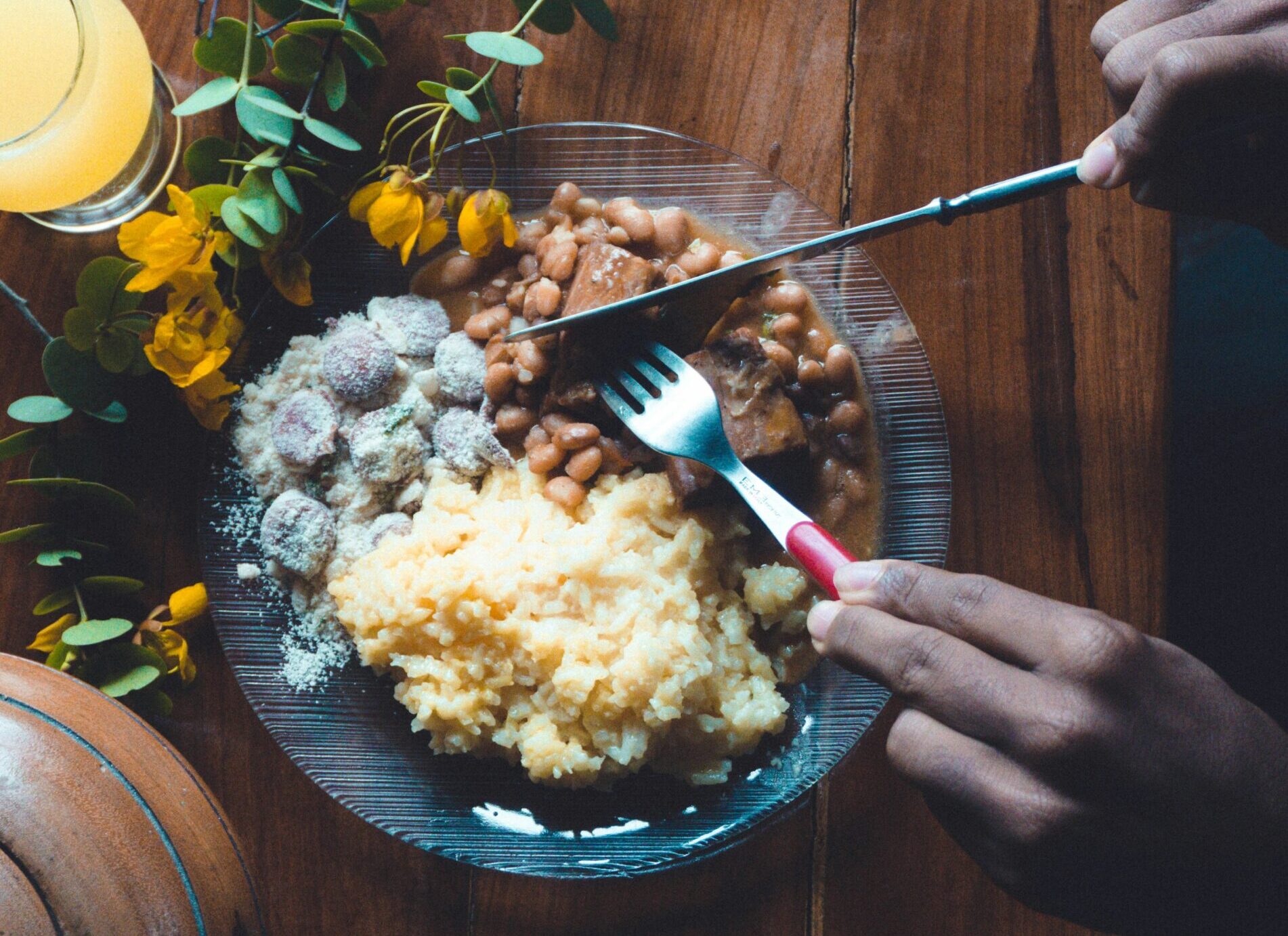
In Jussara’s talk, food emerged as something far greater than just a component of the tourist experience… It emerged as a cultural language, as collective memory, and as a way for a region to present itself to the world without having to compromise its own identity. Throughout the class, she drew on examples from different regions of Brazil to discuss how food communicates identity and how a region’s hospitality is also embodied in the dish, the ingredients, the preparation methods, and the stories that accompany each meal.
“Food has the power to express who we are”, Jussara remarked during the training session, reflecting on how culinary identity shapes the experience of those who visit a region. According to her, when food retains its essence and remains connected to the local culture, it enhances hospitality and creates a sense of belonging that visitors carry with them long after their trip is over.
The class sparked a lively discussion among the participants, who raised questions, shared examples, and offered reflections on the loss of culinary identity, the preservation of gastronomic traditions, and the challenges of keeping cultural identity alive in the face of pressures from the tourism market. “The session ran over the scheduled time because the discussion unfolded in such a relaxed, enjoyable way,”he recalled.
What about food sovereignty?
 Adding to the discussion, Lucila Egydio offered a perspective focused more on food sovereignty and security, as well as practical operations in community-based tourism. Yet she did so without making the conversation seem dry or detached from the reality of the local communities. On the contrary, she connected technical concepts to the daily lives of the communities, showing how food, hospitality, logistics, organization, and autonomy go hand in hand within a well-structured experience.
She emphasized the importance of viewing food not merely as a commodity, but as a right, a source of autonomy, and a form of cultural expression. “Food sovereignty has more to do with producers’ autonomy and local control, viewing food as a right and not just as a commodity,”she explains.
Lucila also shared her thoughts on farming, nutritional quality, proper handling, and the responsibility of welcoming visitors. The conversation then turned to the behind-the-scenes aspects of community-based tourism: lodging, reservations, the atmosphere, division of tasks, team organization, checklists, and everything that supports the experience long before the visitor arrives.
“I think they were eager to understand the day-to-day operations—what the challenges are, how things are organized, and what the different departments are,”he said, commenting on the participants’ reception.
Affection and depth
Perhaps it was precisely this blend of practical experience, warmth, and depth that made the classes resonate so deeply with those who participated. For Maria Aparecida de Alcântara, one of the leaders of the initiative through Rede Tucum, Raízes’ involvement brought not only technical knowledge but also a methodology rooted in real-world experience in the field. In her testimony, she highlighted the ability to transform complex topics into accessible reflections, connected to the reality of those who live and build community-based tourism in their daily lives.
According to her, the classes received a lot of positive feedback. “Community-based tourism transforms food into a local asset. And they demonstrated this model of tourism in rural areas based on their own experiences and the work they’ve already been doing. It was a very powerful exchange,”she added.
Ultimately, we hope that what has stayed with you after the classes is precisely this sense that discussing food sovereignty in the context of tourism also means discussing the right of territories to remain true to themselves—to preserve their flavors, their ways of doing things, their ways of welcoming others, and their relationship with the land.