Over the years we’ve spent working on social and environmental impact at Raízes, we’ve been asked the same question time and time again: Is this business viable?
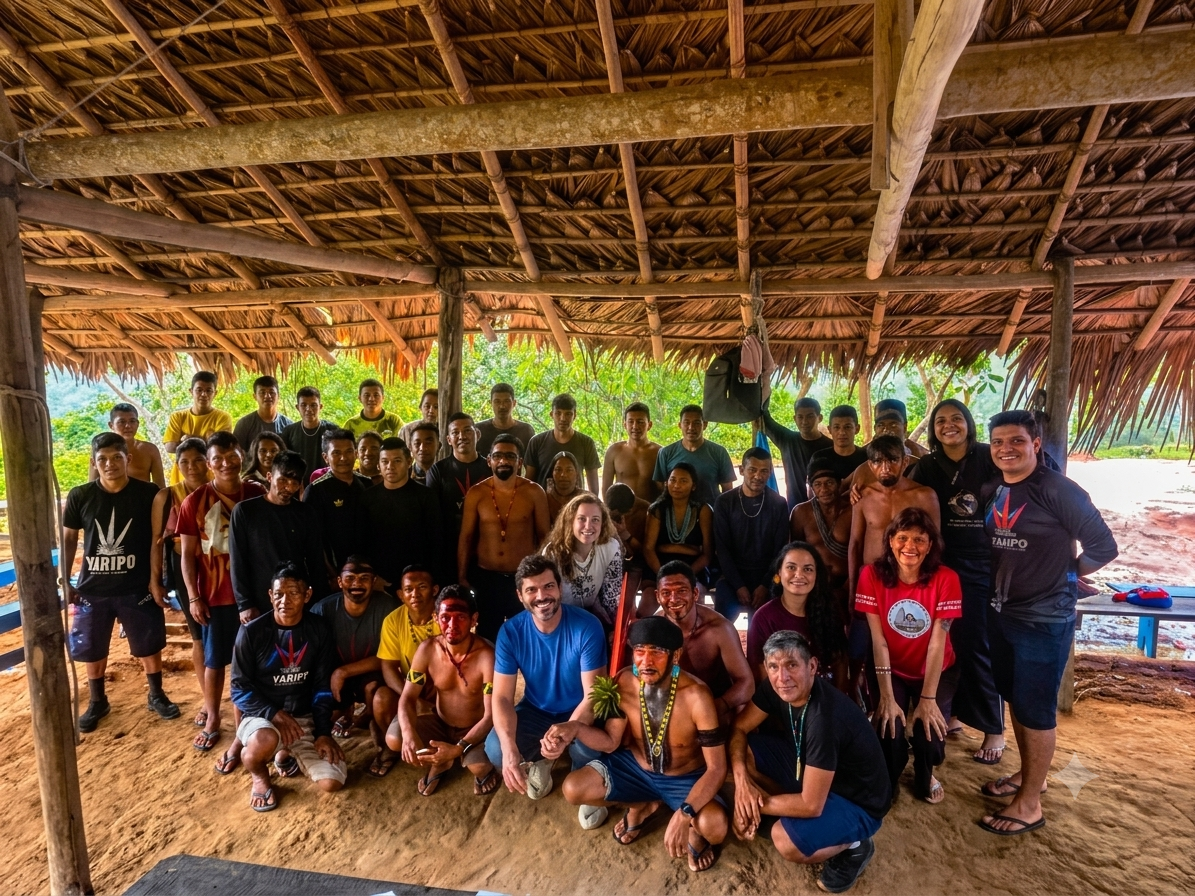
Sometimes it arises in a very systematic way, such as when we conducted a feasibility and market analysis for a tourist train in the interior of São Paulo or the review of the Yaripo Yanomami Ecotourism Business Plan. Most of the time, however, the issue of feasibility emerges as an inherent challenge and an ever-present concern for both small business entrepreneurs (our beneficiaries) and large companies undertaking projects (our clients).
Ultimately, the question is always the same: Is it worth continuing to invest money—and, above all, time and energy—in this project or business?
The essencial question
This is a crucial question. Our resources are limited, and we need to choose carefully where to invest. But to answer it, we need to go far beyond the most basic calculation—the difference between revenue and expenses or between costs and expected benefits.
Before deciding whether something is feasible or not, it’s worth revisiting the very foundations of the initiative. Is the value delivered truly optimized? Would it be possible to offer something more relevant to the audience? Do we truly know this audience, or are we working on assumptions? Is there a potential segment we haven’t yet identified?
Rather than simply assessing the viability of the current model, it may be more worthwhile to investigate the viability of the potential model. This requires understanding the market, identifying untapped opportunities, and recognizing how changes to the proposal can completely transform the expected outcome.
Offer and Demand
In addition to traditional supply and demand factors, there are contextual and relational aspects that deserve attention. Who are the stakeholders involved in the business or project ecosystem? What economic, social, technological, or environmental trends might influence its future? Does the context favor expansion or require adaptation? Are there regulatory or legal barriers that need to be considered?
These questions help build a broader, more strategic view of feasibility.
Finally—and, in my opinion, more important than all the technical aspects—there is a factor that is as simple as it is often overlooked: the energy of the leaders or proponents.
These days, there’s a lot of talk about purpose—that “sparkle in the eyes” or passion. I prefer to call it energy: the genuine willingness to devote part of one’s life to building a project. Yes, to invest one’s life.
Projects and businesses depend on capital, knowledge, planning, and management. But they also require something that can’t be measured in a spreadsheet: the ability to get out of bed on tough days, to persevere when results are slow to materialize, to learn from mistakes, to adjust course, and to keep moving forward.
No feasibility study will be complete if it ignores this aspect. Perhaps one of the most important questions is precisely this: How much are the proponents truly willing to invest of themselves?
If you have a project or a business, it’s worth thinking about this. How much have you invested in it?