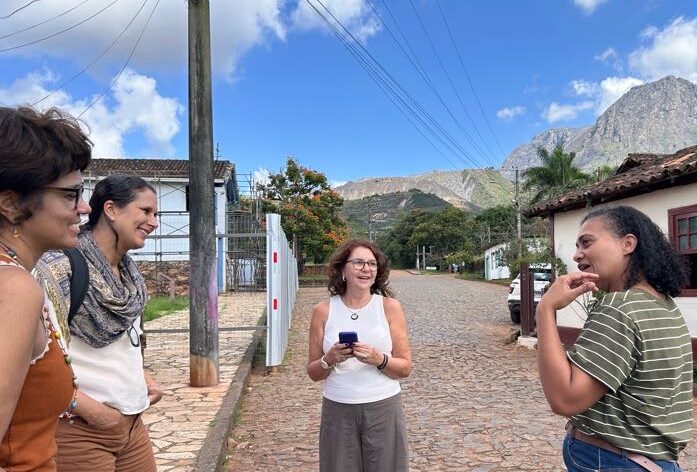
In four districts of Minas Gerais, knowledge related to gastronomy, tourism, cultural heritage, and local traditions is at the heart of an initiative. Raízes Desenvolvimento Sustentável is working in partnership with UNESCO (the English acronym for United Nations Educational, Scientific and Cultural Organization) as part of the project “Building Peace and Dialogue for the Sustainable Development of the Upper Doce River Region,” in cooperation with Samarco. An initiative that brings together communities, associations, and local groups in a process of recognition, strengthening, and exchange of best practices.
The initiative focuses primarily on projects led by women. In three of these areas, the work is related to gastronomy and the organization of food festivals; in another, the main focus is tourism, with the development of a tourist itinerary tied to the area’s identity and strengths.
Cultural Preservation, Territory, and the Future
The project aims to document cultural practices, while also helping to ensure that this knowledge remains alive, strengthened, and linked to opportunities for income generation and local development. In this process, Raízes supports the methodological development of the initiatives, as well as the identification and systematization of best practices. In addition, we have been organizing exchanges among the participating groups and developing a long-term plan for the involved territories.
This experience also aligns directly with an approach that has been a hallmark of Raízes’ history: being close to the beneficiaries, listening to those on the ground, recognizing what already exists, and helping to ensure that solutions are developed collectively. And most importantly: respecting the unique characteristics of each community.
Catas Altas: Memory, Collective Practices, and Plans for the Future in Morro d’Água Quente
In Morro d’Água Quente, in the Catas Altas district, the project builds on an existing community initiative that is well-known in the area: Sabores do Morro—an old acquaintance of Raízes that we’ll discuss in more detail in a dedicated post about this reunion;
This initiative involves systematizing the practices developed over the years by Sabores, with the goal of organizing lessons learned, methodologies, management approaches, and best practices that can inspire other groups participating in the project.
In addition to this systematization phase, the project also includes opportunities for listening and co-creation aimed at developing a plan for the group’s future, bringing together organizational, productive, and management guidelines. The idea is that the experience accumulated within the territory be treated as living memory and knowledge, capable of guiding new steps and strengthening community governance.
Mariana: Cuisine as a Symbol of Identity and the Creative Economy in Paracatu de Baixo
In Paracatu de Baixo, a subdistrict of Mariana, the initiative focuses on knowledge related to local cuisine. The work involves a training cycle featuring classes, discussions, and opportunities to listen to stories about recipes, ingredients, family memories, and food practices that are part of the region’s identity. The goal is to integrate technical training with the emotional and symbolic dimensions of food, recognizing cuisine as both a cultural reference and a potential source of income.
Throughout the process, culinary traditions will be documented and records compiled to create a recipe book developed in collaboration with the participants. More than just a final product, this material serves as a way to celebrate stories, methods, and knowledge passed down through generations, while also paving the way for this knowledge to engage with creative economy initiatives, food festivals, and other local opportunities.
Ouro Preto: Community Market and Strengthening of Associations in Antônio Pereira
In Antônio Pereira, a district of Ouro Preto, the initiative focuses on mobilizing the community, listening to its needs, and co-creating a community market. The process involves mapping local associations, products, and services, as well as holding meetings to collectively define the market’s concept, develop an operational plan, build its identity, and agree on roles among the groups involved.
The fair is designed to serve as both a marketplace and a tool for community building. By bringing together various local associations and initiatives, the project aims to support the organization of a pilot program that promotes local production, fosters collaborative relationships, and provides lessons learned to ensure the initiative’s continuity after the project’s implementation period.
Santa Bárbara: Tourism, Governance, and Itinerary Planning in Brumal
In Brumal, in the district of Santa Bárbara, tourism is the main focus. The work begins by listening to local stakeholders and mapping the area’s attractions, businesses, and points of interest, taking into account criteria such as appeal to visitors, current operations, and potential for integration into a more organized tourism experience.
Based on this assessment, the plan includes initiatives for collective alignment, dialogue with the market, a participatory workshop on commercial route planning, sales-focused tourism communication, and the establishment of the first foundations for future shared governance. The goal is to help Brumal transition from a tourism model that is still largely spontaneous to a slightly more structured approach, connected to the region’s identity, its cultural and natural assets, and the real possibilities for responsible marketing.
To safeguard is to empower those who act
For Raízes, participating in a project like this is an opportunity to reaffirm the importance of culture as a living dimension of sustainable development. When a recipe, a market, a tour, an association, or a way of doing things is valued, it is not just a matter of preserving a tradition from the past, but of recognizing the people who keep that knowledge alive in the present.
In a country marked by enormous cultural diversity, initiatives like these play a strategic role in strengthening communities and raising the profile of their knowledge. For these and other reasons, we are grateful to be able to help ensure that these cultural heritages continue to foster a sense of belonging, autonomy, and, as a result, a future!