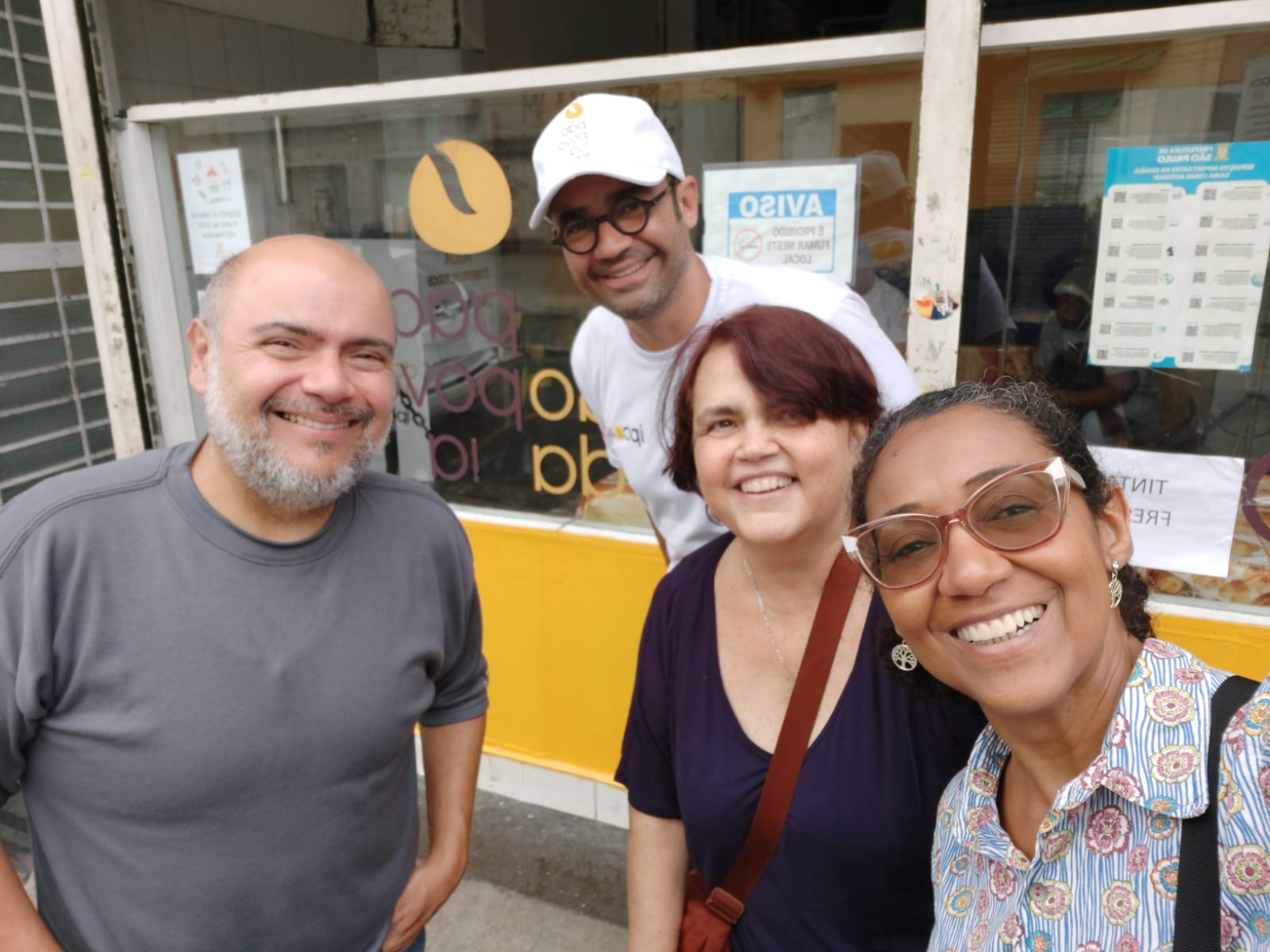
Anyone passing through the Luz neighborhood in downtown São Paulo might not even imagine how many stories lie behind a loaf of bread. That’s right, a loaf of bread. But not just any loaf. There are people who rely on it as part of their daily diet, and others who have found in the production of this very food an opportunity for work and to rebuild their lives. It is within the daily routine of Pão do Povo da Rua that we are exploring a new possibility: how can tourism contribute to the continuity of a social project that has already transformed so many lives?
The question above led us to an initiative that began in 2020, during the COVID-19 pandemic, when chef and researcher Ricardo Frugoli began preparing meals for homeless people near his home in São Paulo. What began with just a few meals grew rapidly and gave rise to an effort that today goes far beyond simply distributing food.
Together with others involved in the initiative, Frugoli developed a bread designed specifically for people facing hunger on the streets: nutritious, tasty, soft enough to make it easy to chew, and with characteristics that help it stay fresh. The recipe gave the project its name, and the project also began offering vocational training in baking and pastry making, creating opportunities for people in socially vulnerable situations.
Now, a partnership between us at Raízes Desenvolvimento Sustentável, and the responsible tour operator, Pure Brasil, aims to assess how tourism and other travel experiences could contribute to the financial sustainability of Pão do Povo da Rua, expanding its income-generating opportunities and involving those who participate in the project in the development of these activities.

Community-based tourism begins with listening
The proposal came from Douglas Simões of Pure Brasil, a friend of Frugoli’s who is familiar with the funding challenges faced by the project, which relies on donations and partnerships to sustain its activities. As a tour operator, Douglas saw an opportunity to bring visitors closer to this reality, including through educational experiences or voluntourism, thereby creating a new source of funding for the initiative.
The idea took shape during a conversation with Mariana Madureira, our executive director, and evolved into a collaborative effort to research and develop potential tourist itineraries. But before deciding what to offer visitors, we’re trying to understand what truly makes sense for those who are involved in the project on a daily basis.
Leading this initiative is Lucila Egydio, project director at Raízes, a biologist with a degree from USP, a specialist in ecotourism from Senac, and a master’s degree in Gerontology from USP. With a career that combines experience in territorial development, sustainable tourism, and socio-environmental projects, Lucila coordinates the phase of gathering input and evaluating visitation possibilities.
“We’ve already heard from several people involved in the initiative—from the administrative staff, human resources managers, and project managers to the communications team, as well as some individuals who have overcome homelessness and now work for the project,” says Lucila.
In addition to these conversations, we are hearing from representatives of the tourism industry, professionals working in educational tourism, independent guides who develop itineraries through downtown São Paulo, and Pure Brasil itself. These perspectives help us understand who might be interested in these experiences, how they might work, and what precautions would be necessary to carry them out.
This way of working is similar to our methodology of active listening and the principles of community-based tourism, in which the people directly involved must participate in the decisions and share in the benefits generated by the activity. “The main goal is really to provide an opportunity for the project to generate income and to engage people—that is, to involve them in the project itself as part of this itinerary—so that they can take the lead,” adds Lucila.
Turning the idea into a tourist experience
The project, which began in 2026 and is expected to be completed by December, also includes the participation of Claudia Gonçalves, a member of our administrative and financial team who serves as a consultant on Raízes projects. Her involvement brings expertise in management and financial planning to the discussions on possible ways to structure the itinerary.
With the information gathered, the next step will be to develop proposals for activities and discuss them again with the Pão do Povo da Rua team. From there, it will be possible to assess their feasibility, identify any training needs, and determine the adjustments needed for a potential tourism operation in 2027.
For us, this process also reinforces something we’ve learned through various projects: the development of tourism must be based on the needs and expectations of those directly involved. After all, an experience only makes sense when it contributes to the lives of the people who make it possible.
And you—did you already know about Pão do Povo da Rua? As we continue working on this proposal, we invite you to learn about the initiative and find out how you can contribute. Will you join us?