Does your organization want to host lectures, workshops, or training sessions on women’s empowerment, public policy, the creative economy, responsible tourism, or regional development? These are some of the topics that Raízes Desenvolvimento Sustentável has been bringing to various forums for discussion, drawing on our 20 years of experience in the field working on projects with socio-environmental impact.
Over the course of two decades, we have carried out more than 100 projects, directly reached 23,000 people, and mentored, incubated, or accelerated 214 businesses. And beyond the numbers, we understand how socio-environmental projects grapple with historical inequalities, competing narratives, institutional expectations, indicators, governance, budgeting, community engagement, and sustainability.
We take all these aspects into account when we propose lectures, workshops, and/or training sessions that engage teams, leaders, partners, and beneficiary audiences.
Why bring this discussion into your organization?
There is a real demand for this type of knowledge. Women’s entrepreneurship, for example, has reached a record in Brazil in 2025: More than 2 million MEIs and micro and small businesses led by women were created during that period, according to a survey by Sebrae. At the same time, data from the Ministry of Labor and Employment show that women still face persistent barriers in the labor market, such as wage inequality, informal employment, and underrepresentation in leadership positions. The same applies to responsible tourism. In 2025, visits to federal conservation areas generated R$ 40.7 billion in sales, contributed R$ 20.3 billion to GDP, and supported more than 332,000 jobs in the country, according to a study by ICMBio. These figures demonstrate the sector’s economic potential, but they also highlight the need for planning, community participation, and a fair distribution of benefits.
Data on the creative economy also underscore this potential for growth. In Brazil, the creative industry accounted for 3.59% of the national GDP in 2023, generating approximately R$ 393.3 billion, according to the Firjan Creative Industry Mapping 2025. In the labor market, the Culture and Creative Industries sector reached 7.79 million workers in the third quarter of 2024, the highest level since the beginning of the historical series tracked by the Itaú Foundation Observatory.
The Raízes initiative encompasses and connects all these areas of activity, since women’s entrepreneurship, tourism, and the creative economy can also converge in practice.
Where We’ve Been Recently
Among its recent activities, the team participated in training sessions related to responsible tourism and territorial development, such as the online course on Community-Based Tourism, Food Culture, and Regional Economy, which featured Lucila Egydio and Jussara Rocha and addressed topics such as regional hospitality, food security, welcoming visitors, community organization, fair pricing, and regional communication strategies.
We also participated—represented by Mariana Madureira—in a training session with eTrilhas, focused on Rio de Janeiro’s state conservation areas. The session addressed responsible tourism and entrepreneurship in protected areas.
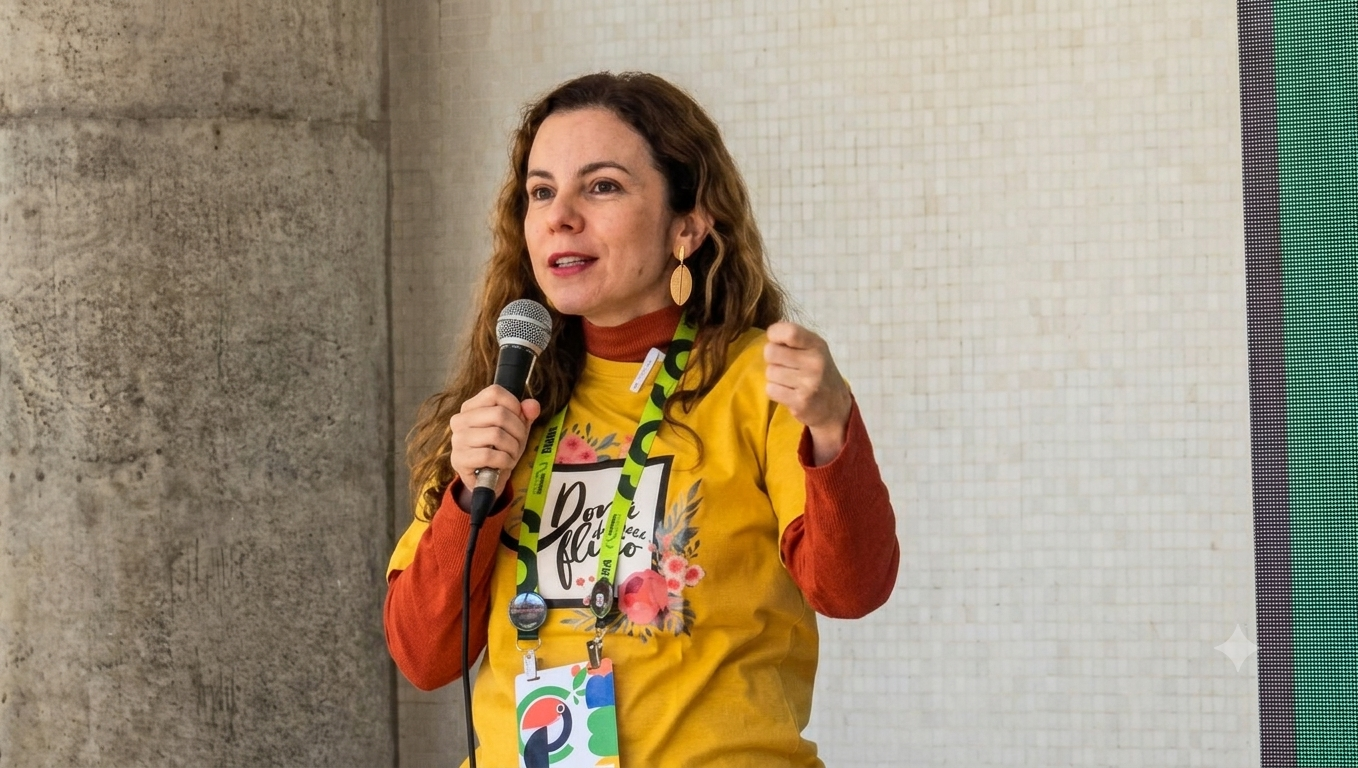
Another highlight was the organization’s participation in CAMBI 2026, where Raízes presented its own methodologies and spoke with companies, foundations, institutes, and organizations interested in designing impact projects with greater consistency. Among the topics presented at the event were Dona do Meu Fluxo, an initiative focused on women’s menstrual, financial, and life autonomy, and the Assessment for Socio-Environmental Projects, a methodology created to support organizations in conducting territorial analysis, engaging with stakeholders, assessing risks, and strategically designing socio-environmental initiatives.
Raízes also conducted mentoring sessions with the Instituto Futuros, formerly Instituto Oi, focused on tourism and handicraft businesses supported by the institution. These discussions helped broaden knowledge regarding market positioning, product development, the promotion of local knowledge, market access, and the strengthening of initiatives that emerge from these communities.
In Belo Horizonte, Mariana Madureira attended an in-person workshop at the “Mulheres de Minas” gathering, as part of a program linked to Instituto Periférico. The activity provided a space for discussions on entrepreneurship, women’s autonomy, public policy, and development—topics that have been central to the projects and methodologies carried out by Raízes for many years.
All of this took place during the first half of 2026.
Kicking off the second event in João Pinheiro, Minas Gerais, Jussara Rocha participated in a panel discussion on “Cultural Roots, Identity, and Social Development”; and, between today and tomorrow, she is leading a two-day workshop as part of an initiative linked to Vivas Cultura e Esporte, within the context of the Arte em Rede project. The activity directly addresses a key focus of Raízes: strengthening initiatives that connect culture, memory, the creative economy, the local area, and local leadership.
For Raízes, part of the inspiration comes from creating spaces for exchange based on what we learn by doing, adjusting our course, and building together. It’s also a way to keep sowing the seeds of the future.
Stay tuned for more!