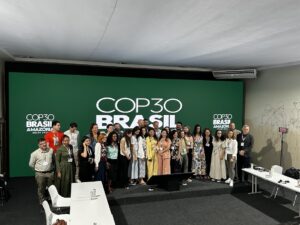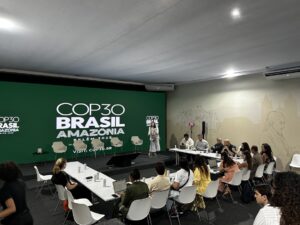
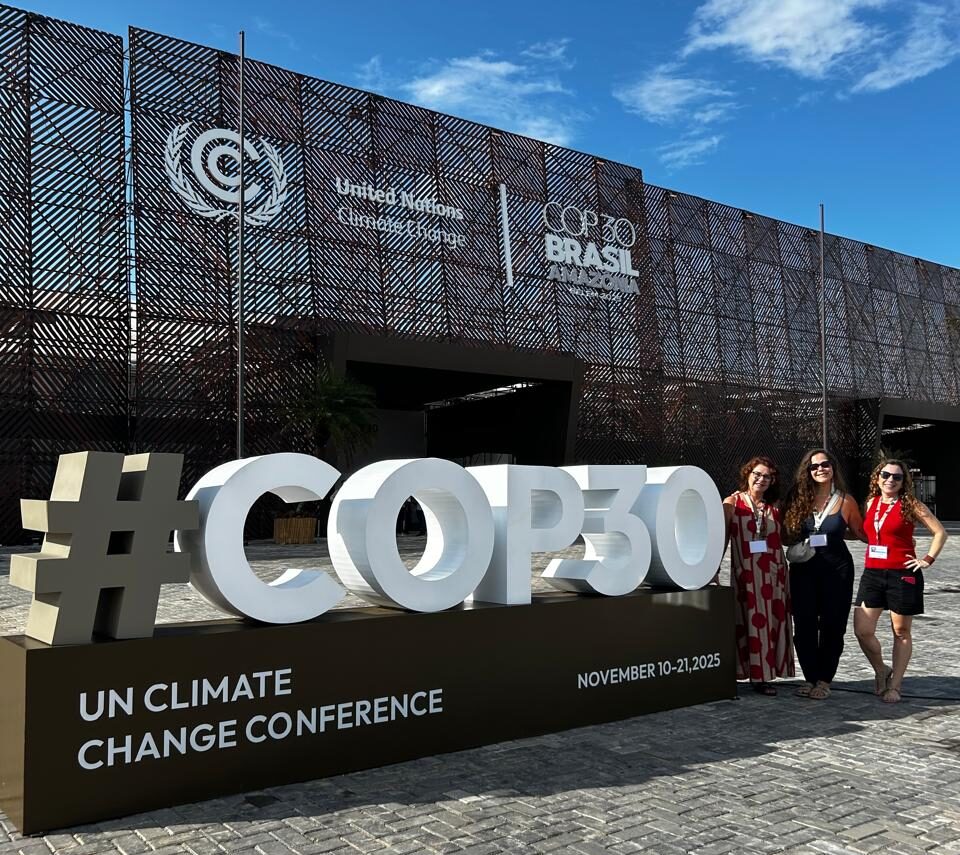
The 30th United Nations Climate Change Conference (COP 30) came to an end after taking place in Belém, Pará, from November 10 to 21. It was a milestone for the world, for Brazil, and especially for the Brazilian Amazon. For the first time, the heart of the planet’s largest rainforest hosted the world’s most important climate debates. Being there, in direct dialogue with communities, organizations, governments, and companies, was not only symbolic, but it was also urgent.
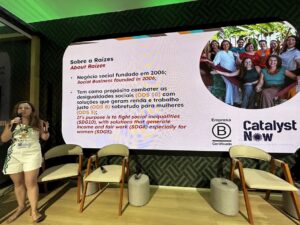
For Raízes Desenvolvimento Sustentável, participating in COP30 in different agendas was an opportunity to reinforce something that has been driving our work for almost two decades: climate solutions need to come from the territory and recognize those who care for the forest every day.
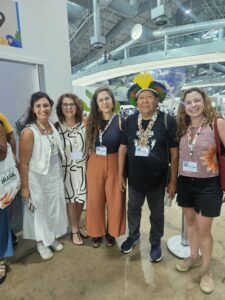
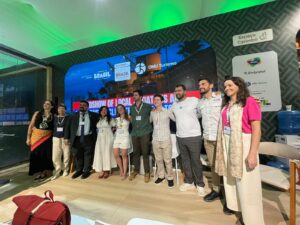
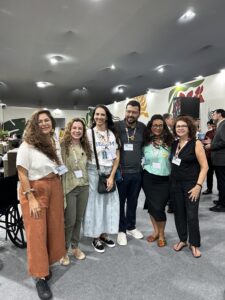
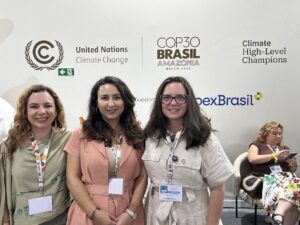
Throughout the conference, part of the Raízes team (directors Mariana Madureira and Jussara Rocha, as well as social projects specialist Tauana Costa) attended meetings that focused on community-based tourism, climate justice, and water rights. Tauana Costa) attended meetings that placed community-based tourism, climate justice, and the bioeconomy at the center of discussions. More than just recording speeches, this text seeks to reflect on what remains, the legacies of this edition for our work, because big events end, but the lessons learned continue to open new paths.

1 – Climate justice begins by recognizing those who already experience the impacts every day
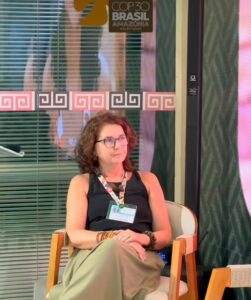
At the meeting COP30 Special Chat: Climate Justice with Social and Environmental Entrepreneurs, held at Espaço Folha, one point emerged strongly: riverine and Amazonian populations are already feeling the climate crisis disproportionately. Mariana Madureira, co-founder and executive director of Raízes, highlighted a paradox that is difficult to ignore: “We are talking about prolonged droughts, lack of drinking water, and even hunger in the Amazon. This is a territory that, in theory, is abundant in water. The climate crisis is already routine for those who live here.” This is a territory that, in theory, is abundant in water. The climate crisis is already routine for those who live here.”
It is in this context that tourism—often seen only as leisure—also reveals itself as a tool for regeneration, provided it is approached responsibly. She emphasizes: “Tourism has contradictions. It can have a negative impact, such as overtourism and carbon footprint, but it can also be profoundly transformative. Sustainable tourism values traditional knowledge, generates income, and strengthens conservation.”
When tourism respects culture and nature, it becomes a strategy for permanence in the territory, for autonomy, and for justice.

This is important because the climate crisis does not affect all populations equally. And that is a fact. We have already talked a few times here about climate justice. And during the chat Tourism and Climate: Sustainable Paths in the Amazon, held at Casa Brasil throughout COP, one reality became clear: those who contribute least to the climate crisis are the ones who suffer most from it.
This is expressed on several fronts:
- losses in the production of açaí, cocoa, and fishing due to droughts and extreme heat;
- food insecurity in remote communities;
- direct impacts on small businesses that depend on natural cycles;
- difficulty in keeping young people in the area.
It is under the effects of this context that local strengthening, governance, and visibility become essential responses. Strengthening entrepreneurs means expanding autonomy, improving organization, professionalizing services, and creating income alternatives capable of withstanding periods of climate instability. Governance—with collective agreements, community protocols, and shared decisions—helps to structure tourism and the territory, ensuring that benefits and responsibilities are shared among all.
2 – Community-based tourism: the reconnection that can make us rethink our paths
Belém became a living showcase of Amazonian socio-biodiversity during COP. Being there, living alongside indigenous peoples, riverine communities, and extractivists, highlighted something that Mariana accurately summarized in the Ministry of Tourism’s Roadshow of local initiatives as solutions on climate action in tourism: “The COP in the Amazon helps us see other ways of living. There is ancestral knowledge that is science. And being here, living alongside indigenous peoples and traditional communities, makes us understand that perhaps life in cities is a little distorted — that this is the natural way, integrated.”
Community-based tourism operates on the same logic: bringing people closer to the forest sensitively and respectfully, allowing for real experiences, not just distant observations. This reconnection brings to light a profound dimension. “We are experiencing a climate crisis, but also an ethical crisis. As long as everything is about money, we will continue to exacerbate inequalities and environmental destruction,” reflected Mariana. Seeing nature through the eyes of those who consider it sacred and not a resource makes us rethink our relationship with it.
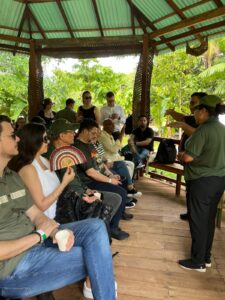
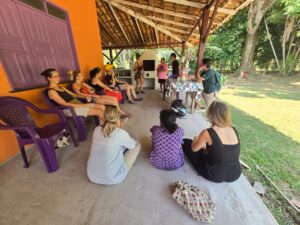
The example of the Combú Route, an initiative of Sebrae Nacional, in partnership with Sebrae Pará and Raízes as the executing partner, demonstrates this in practice. Local entrepreneurs are finding tourism to be an alternative way to keep the forest standing. Like Charles, one of the local entrepreneurs, who used to cut down trees and now makes a living from producing açaí and serving visitors directly, “he [the entrepreneur] no longer cuts down trees to survive and doesn’t even need to sell his açaí at the market anymore. Tourists consume everything right there, with the added value of the experience. This changes lives and changes the logic of the local economy.”
Tourism in this context exercises a soft power or gentle power. Instead of confrontation, we believe that the force of small changes, of subtle micro-revolutions, is capable, when added together, of moving large structures.
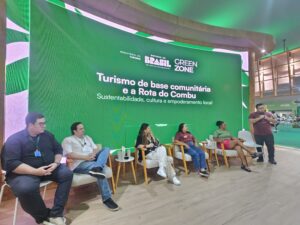
In the panel, The Future of Tourism and the Importance of Local Actors, Jussara Rocha highlighted how the presence of communities in all stages of the process transforms not only tourism but also the sense of belonging and autonomy in the territories. She used the experience of the Combú Route as a living example of this collective construction:
“Being here to present the Combú Route is to showcase an initiative that was born entirely from the hands of the island’s entrepreneurs—with their participation, legitimacy, and opinion in every decision. When the community builds together, takes on governance, understands the process, and recognizes itself in it, the product becomes theirs as well.”
Jussara also emphasized how this logic connects to other experiences in the region, recalling the words of Adriana Lima, coordinator of the Women of the Islands of Belém Movement (MMIB), who was also present at the panel. Based on her work on the island of Cotijuba, Adriana showed that when community-based tourism is led by residents, the benefits spread throughout the island: from food production to handicrafts, including social projects aimed at young people and other chains activated by tourism.
3 – The bioeconomy is more than just a “trend“; it is about taking resources where they need to go
Among the debates, another element gained prominence: the world is finally looking at the bioeconomy, a production model based on the use of biological resources that aims to offer sustainable solutions for production systems.
There is interest, investment, and a desire to understand how sustainable businesses can grow rooted in the forest. This shift in attention opens doors to new aesthetics, new consumption patterns, and new narratives. “What was once seen as peripheral is now moving to the center. It’s about pride, visibility, and narratives that assert themselves,” said Mariana.
Indigenous crafts, Amazonian cosmetics, native foods, and traditional practices are gaining visibility, not as passing trends, but as political and identity statements. For this movement to be fair, there needs to be coordination between entrepreneurs, communicators, governments, and consumers. It is not just about the market; it is about relationships, care, and appreciation.
Visibility completes this process by connecting communities with the world. When stories, products, and experiences gain reach, more opportunities for business, recognition, and income circulation arise.
Empowering people is essential! Conservation needs people. The people who live there are the guardians of the forest,” Mariana reflects.
The Conference made it clear that there can be no solution to the climate crisis without listening to and empowering those who live in the Amazon. The forest is not a backdrop. It is a subject. It is the present and the future.
We left COP30 with the certainty that the path forward is a collective one, woven together by small and large actions that transform the world’s relationship with people, the environment, and nature, especially with the Amazon. And we continue, as always, alongside the communities and professionals who make this territory a place of power.